
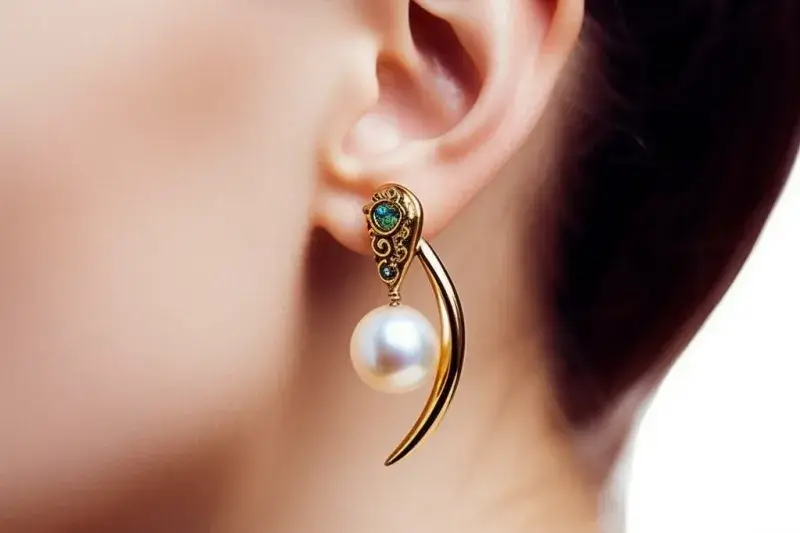
Custom earrings can give a jewelry brand a recognizable product direction, but a useful assortment needs more than several unrelated designs. Buyers should define the role of each style, control shared specifications and decide which details can be repeated across the group.
This guide focuses on assortment planning. The technical manufacturing sequence is covered separately in Truli’s custom earrings manufacturing guide.
Start with the collection role
Decide whether the group needs core studs, size-led hoops, compact huggies, movement-focused drops or a coordinated mix. Each type should support a clear price, scale or design position rather than duplicate another style without purpose.
Record the target customer, market, estimated quantity and intended launch window. These inputs guide design selection but should not be converted into unsupported sales forecasts or profit claims.
Create a controlled design language
Consistency may come from one motif, profile, texture, plating color, CZ arrangement or pearl direction. A butterfly, geometric or floral theme can move across studs, hoops and pendants while using construction appropriate to each product.
Do not force identical dimensions across the group. Keep the recognizable visual cue while adjusting scale, weight and attachment for the earring type.
Build a balanced style mix
Studs offer compact fronts and depend on posts and backs. Hoops and huggies are defined by diameter, profile and closure. Drop earrings introduce connectors, total length and movement. A balanced assortment can use these differences deliberately.
Limit unnecessary unique components where a shared approved part supports the design. Reusing a post, back, charm family or finish reference can simplify specification control, but every finished style still needs its own approval.
Specify materials and decoration
Truli works with sterling silver, brass and stainless steel. Confirm the base metal together with surface finish and plating color. A design moved between metals may need changes to thickness, joints or weight.
For Truli’s current stone-set range, describe stones as CZ unless pearl or synthetic opal is verified. Do not use natural stone or gemstone as a substitute for CZ. Record size, shape, color, quantity and setting method.
Control dimensions and functional parts
A collection sheet should include front dimensions, overall length, target or approved weight, pair orientation and closure type. Posts, backs, hinges, hooks and connectors are functional parts and should not be left to assumption.
Check that each mechanism suits the design and that components remain visually consistent across related styles.
Sample the assortment as a group
Individual samples may look acceptable but still feel inconsistent when placed together. Compare scale, plating color, motif proportions, stone treatment, pearl matching and overall finish across the full group.
Record corrections by SKU or design code. If one shared component changes, identify every style affected before approval.
Plan packaging and presentation
Packaging should protect posts, closures, polished surfaces, chains and moving charms. Confirm whether cards, pouches, bags or boxes fit each style and whether a shared card format works for the whole assortment.
Assortment quality-control checklist
- Clear role for each earring type
- Shared motif or finish rules
- Material and accurate CZ, pearl or synthetic opal descriptions
- Dimensions, weight and pair orientation
- Post, back, hinge, hook and connector checks
- Group comparison for color, scale and finish
- Packaging fit and protection
- SKU-level correction and approval record
Plan for repeat orders
Keep the approved samples, specifications and component references together. When a repeat order changes quantity, color or one design detail, record the change without replacing the original standard.
A strong custom earring assortment combines a recognizable design direction with measurable product-level controls.
